MoE announces new date for ‘delayed’ 2026 BECE results release
The West African Examinations Council (WAEC) is expected to release the provisional 2026 Basic Education Certificate Examination (BECE) results of Junior High School (JHS) students who sat for the national examination on or before July 31, 2026, the Minister in Charge of Education, Haruna Iddrisu, has disclosed.
The Education Minister, speaking at the Government’s Accountability Series on Monday, July 20, said the release of the 2026 BECE results remains the responsibility of the West African Examinations Council (WAEC), stressing that he would not interfere with the work of the examination body.
“I am reliably informed by the Director-General of the Ghana Education Service that, on or before July 31, the BECE results may be released,” the Minister for Education told journalists.
The new date for the national examination results release comes after the West African Examinations Council announced to release the 2026 BECE for School and Private results by July 17, 2026.
Speaking to Adom News two weeks ago, the Public Relations Officer (PRO) for the Council said his outfit had been conducting final quality assurance checks and other verification processes to ensure the accuracy and credibility of the results before they are published.
The spokesperson for the Examination body assured candidates, parents, and other relevant stakeholders that every effort is being made to complete the examination process on schedule.
He indicated that, barring any unforeseen circumstances, the 2026 Basic Education Certificate Examination (BECE) for School and Private results will be officially released on or before July 15, 2026.
To buy a result checker card to check the examination results, dial the shortcode *713*39988# on your phone or visit https://buycheckercodes.com.gh/ to buy the 2026 BECE result check card ahead of the release of the provisional results.
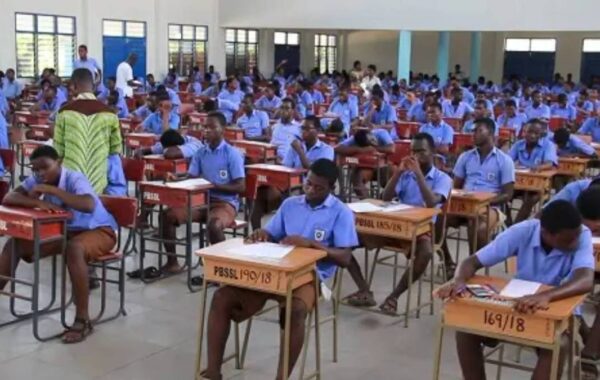
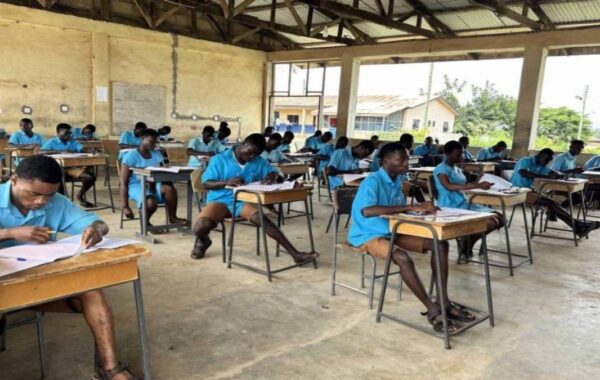
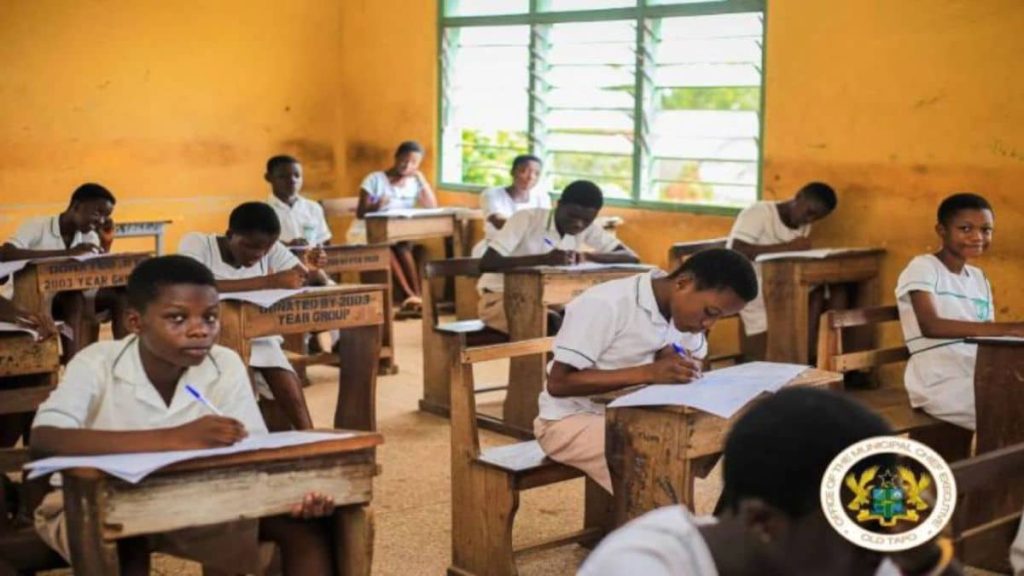
The 2026 Basic Education Certificate Examination (BECE) was successfully administered by the West African Examinations Council (WAEC) from Monday, May 4 to Monday, May 11, 2026.
A total of 619,985 final-year junior high school (JHS) candidates representing 304,273 males and 315,712 females from public and private Junior High Schools across the country sat for the national examination at 2,302 examination centres.
There were 2,303 supervisors, with 2,070 assistant supervisors and 21,791 invigilators who monitored the conduct of the just-ended examination.
This year, approximately 156 other candidates from Togo and Benin sat for the examination, which will end on Monday, May 11, 2026. Five schools from Togo and Benin participated in the examination at one centre.
An official of the Examinations Council explained that the Togo and Benin schools writing the Basic Education Certificate Examination in Ghana “run our curriculum, and so they are eligible to write”.
Regional breakdown
Per the regional breakdown, the Ashanti Region, as usual, presented the highest number of candidates of 124,095 (61,119 males and 62,976 females) from 3,277 schools for examination at 444 centres.
The Greater Accra Region presented 114,243 candidates (54,713 males and 59,530 females) from 3,987 schools, for the School and Private examination at 443 centres.
The Central Region presented 69,496 candidates made up of 34,463 males and 35,033 females from 2,528 schools, for the Basic Education Certificate examination at 247 centres.
The Eastern Region’s 56,700 candidates, comprising 28,287 males and 28,413 females from 2,169 schools, sat for the examination at 211 centres.
In the Western Region, 45,457 candidates — 22,159 males and 23,298 females — from 1,420 schools participated in the examination at 154 centres.
Again, 37,308 candidates in the Northern Region sat for the 2026 BECE for School. The candidates — 19,657 males and 17,651 females from 784 schools —took the examination at 132 centres.
Up to 30,055 candidates (14,756 males and 15,299 females) from the Volta Region from 1,200 schools wrote the examination at 118 centres.
Also, 24,984 candidates (12,244 males and 12,740 females) in the Bono Region sat for the examination at 88 centres (813 schools).
In the Upper East Region, 22,449 final-year students (9,854 males and 12,595 females) from 749 schools wrote the 2026 BECE administered by the West African Examinations Council (WAEC) at 94 centres.
The Bono East Region also had 20,897 candidates (10,149 males and 10,748 females) from 725 schools sitting the examination at 80 centres.
The Western North Region had 17,372 candidates (8,685 males and 8,687 females) taking the examination at 83 centres, while the Upper West Region had 14,982 (6,706 males and 8,222 females) sitting the examination at 51 centres, with the Ahafo Region having 12,578 candidates (6,439 males and 6,139 females) at 50 centres.
The North East Region had 10,033 candidates (5,100 males and 4,933 females) from 251 schools writing at 34 centres, while the Oti Region’s 12,401 candidates (6,495 males and 5,907 females) from 495 schools wrote at 47 centres.
The Savannah Region presented 6,989 candidates — 3,448 males and 3,541 females from 242 schools — for the national examination at 26 centres.